Frequently Asked Questions

Understanding Homelessness

The Canadian definition of Homelessness describes homelessness as “the situation of an individual, family, or community without stable, safe, permanent, appropriate housing, or the immediate prospect means and ability of acquiring it.”

The Indigenous definition of homelessness considers the traumas imposed on Indigenous Peoples through colonialism. According the definition of Indigenous Homelessness in Canada, it is “a human condition that describes First Nations, Métis and Inuit individuals, families or communities lacking stable, permanent, appropriate housing, or the immediate prospect, means or ability to acquire such housing…Indigenous homelessness is not defined as lacking a structure of habitation; rather, it is more fully described and understood through a composite lens of Indigenous worldviews.”
Absolute homelessness - often referred to as “sleeping rough” or “street homelessness” - is homelessness that occurs outside or in makeshift, unsheltered conditions such as encampments. The COVID-19 pandemic significantly increased this form of homelessness, with 94% of communities surveyed in the 2022 National Survey on Homeless Encampments reporting that current or past encampments had formed in their communities.

Absolute homelessness is also a result of the Root Causes of Homelessness. Although many people picture this form of homelessness when discussing housing and homelessness, only 2.2% of Canadians experience absolute homelessness, whereas 10.5% experience hidden homelessness (e.g., couch surfing).

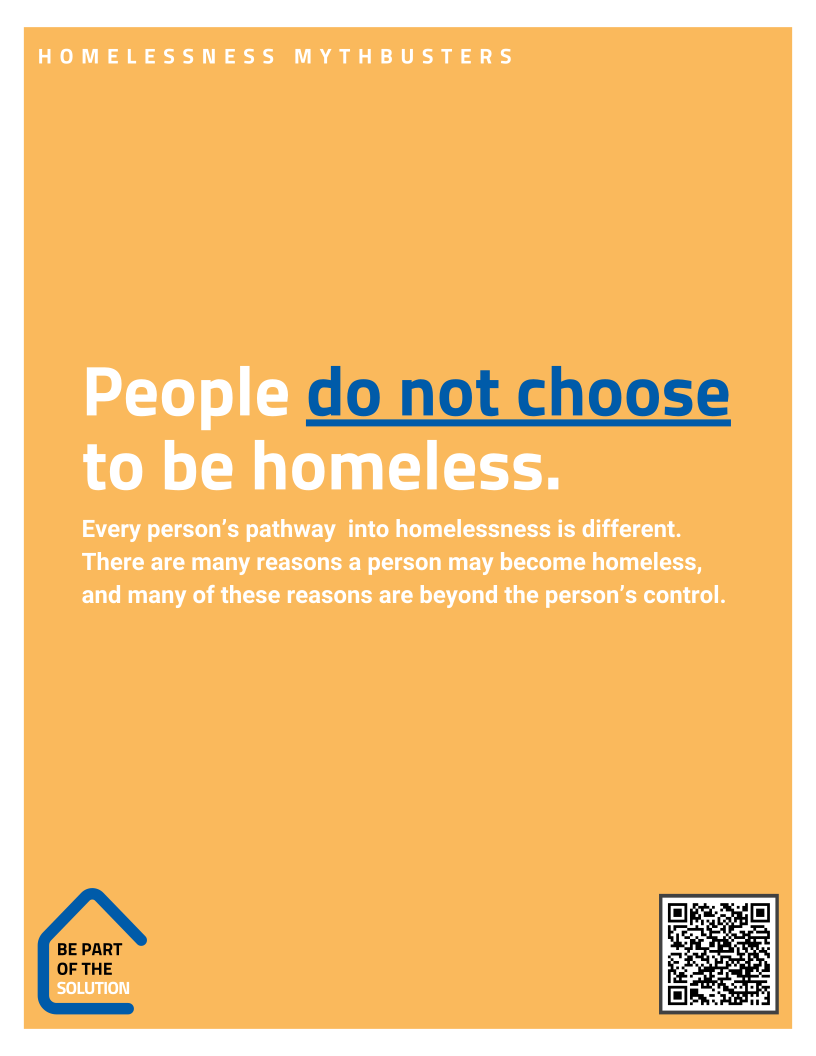
There are many reasons why someone may become homeless. Housing loss is often not due to one event, but many overlapping events and circumstances1,2,3. Many people are experiencing homelessness due to large, nation-wide factors beyond their control. In Canada, some of the most common causes of homelessness are:

System Factors

  • a lack of affordable housing
  • rising costs of living
  • increased unemployment
  • discrimination and inequality
  • historical treatment of Indigenous Peoples
  • transitions out of public systems, such as:

Individual Factors

  • relationship breakdown
  • gender-based violence
  • physical health issues
  • mental health issues
  • traumatic events
  • substance use disorders

Recently, national and global emergencies have led to large increases in homelessness across Canada. Job loss and housing evictions increased throughout the COVID-19 pandemic4, leading housed individuals and families into homelessness. The COVID-19 pandemic worsened the health of people already experiencing homelessness, who were five times more likely to die within 21 days of infection5. The ongoing opioid crisis continues to harm people who use drugs while experiencing homelessness, highlighting the need for additional treatment services and supportive housing options. Opioid-related deaths in shelters across Ontario have tripled since 20206, rising by 116%. In comparison, opioid deaths outside of homeless shelters rose by just 13%.

Experiencing homelessness puts people at greater risk for death7, serious long-term health conditions7, and poor mental health8,9. These intersecting health and quality of life disparities lead to the continued loss of people experiencing homelessness from our community, and with them the loss of community potential.

A national shortage of affordable housing has left people experiencing homelessness with limited options for exiting homelessness, and they end up spending long periods of time in institutions that are meant for emergencies and short-term stays11,12. In 2023, the Canada Mortgage and Housing Corporation (CMHC) reported that Canada will need 3.5 million additional housing units10 to restore housing affordability across the Country, in addition to what is already being built. Undue pressure on emergency services and short-term solutions has led to additional government spending across healthcare, corrections and shelter. To address these costs, all three levels of government must participate in a unified approach that prioritizes the creation of affordable housing and supportive low-barrier prevention services.

Please view the accompanying graphics, for more information.

There are currently over 300 individuals on Lambton County’s By-Name List of homelessness. This is not the number of individuals that are sleeping outside. This list includes community members from across Lambton County who are couch-surfing, housed unstably, staying in emergency shelters, staying in transitional housing, or sleeping outside.

The Homelessness Prevention Outreach team conducts mapping and data collection alongside local service providers to ensure we have an accurate understanding of who is experiencing homelessness locally. Of these 300+ individuals, roughly 70 individuals have reported sleeping outside at some point each month.

The following dashboard contains data regarding the prevalence and characteristics of households experiencing homelessness in Lambton County. Reliable, real-time data enables for targeted and equitable decision-making and ultimately measurement of our community progress towards Functional Zero.

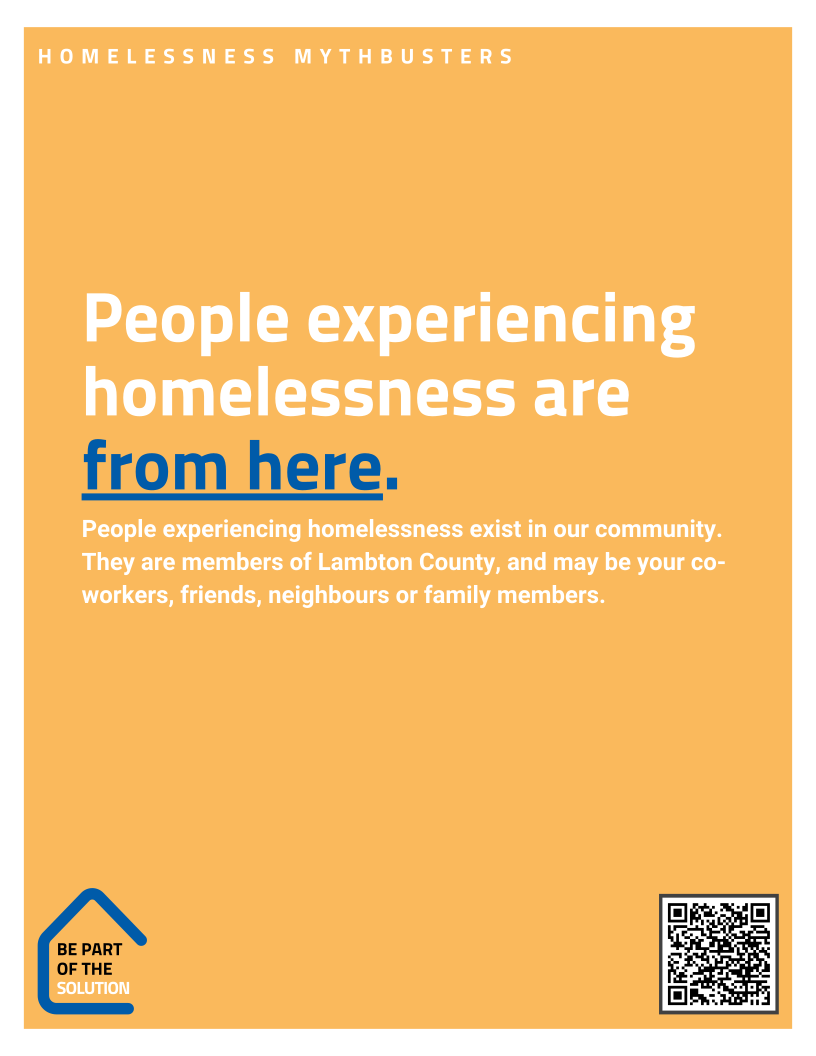
No, individuals that are experiencing homelessness in Lambton, are from Lambton. Through the delivery of social assistance, and our homelessness prevention system, social services operates two dedicated information systems that include detailed housing history for every consenting individual experiencing homelessness. This available information includes housing history, and social assistance history from all other Ontario communities.

While individuals experiencing homelessness can be transient, it is the rare exception that individuals experiencing homelessness come to Lambton from other municipalities. When individuals from out-of-town access our local system, they are assisted in returning to their home community.

Individuals are not bussed into Lambton from other communities. Social service leads across Ontario municipalities work closely together and stay in close contact with each other – these rumours are unfounded.

Housing & Homelessness Response

Lambton County's Homeless Prevention Framework is designed to help individuals and families experiencing homelessness locate and maintain long-term housing. Supported by the Federal Government’s Reaching Home Strategy and the Provincial Homelessness Prevention Program, a community-wide network of partner agencies utilize evidence-informed practices and real-time local data to serve households at-risk of or experiencing homelessness.

Homelessness Prevention Services in Lambton County are funded by individual not-for-profit agencies, that may also receive support through Social Services. Social Services also directly delivers services to families and individuals, and supports local agencies using funding from the Federal Reaching Home program (RH), the Provincial Homelessness Prevention Program (HPP), and County of Lambton levy dollars, among other funding sources.

The following tables summarize the allocation of program funds for the Homelessness Prevention Department:

Program Revenue (2024) ($)

Homelessness Prevention Program (HPP)

5,615,600

County Levy

1,827,558

Reaching Home (RH)

1,772,769

Total Revenue

9,215,927


Program Expenditures (2024) $

Prevention

2,677,714

Homelessness & Emergency Shelter

2,643,024

Supportive Housing

1,675,602

Affordable Housing

893,922

Program Administration

541,673

Community Housing

341,888

Transitional Housing

241,320

Coordinated Access

200,785

Total Expenditures

9,215,927


Lambton County’s housing supply reflects the entire housing continuum, from emergency shelter to home ownership. The increasing cost of home ownership has led to more demand in the private rental market, while the increasing prevalence of homelessness has led to more demand for supportive, affordable, and social housing.

These middle-ground housing options (supportive and social) are vital to transitioning community members from homelessness into secure housing. At present, the County of Lambton has funding agreements with partner agencies who operate supportive housing and affordable housing. The County operates its own social housing through the Housing Services Department. A greater quantity of supportive and affordable housing is required to reduce homelessness and keep up with local demand. For more information on the County’s affordable and supportive housing initiatives, read the most recent Affordable Housing Update to County Council.

The Out of the Cold program is a seasonal temporary shelter program that operates once a year when temperatures drop low enough to pose harm to people experiencing homelessness that stay outside. The purpose of this program is to offer relief from the elements and meet demands for emergency shelter as it increases throughout the winter months. This program began in 2021 at Central United Church, and moved operations to the former Laurel Lea-St Matthew Presbyterian Church at 837 Exmouth St in 2022 and 2023.

This space also hosts the Housing and Homelessness Resource Centre (HHRC), so that individuals in the Out of the Cold program can easily access services during their shelter stay.

In May of 2024 County Council voted to extend this program through the summer months, to ensure individuals experiencing unsheltered homelessness had ample opportunity to access shelter beds.

In Ontario, social assistance is given to households through the Ontario Works (OW) Program or the Ontario Disability Support Program (ODSP). Social assistance rates are determined by the province, and vary depending on the size of a household. Shelter allowance is a portion of social assistance intended to cover both rent and utilities every month. Ontario Works rates have not changed since 2018, while ODSP rates were adjusted to account for inflation beginning in July of 2023. The shelter allowance for OW and ODSP in Lambton County are outlined in the table below:

Single-person Household Allowance Ontario Works ODSP

Shelter

$390

$582

Basic Needs

$343

$786

Total Assistance

$733

$1368

It typically costs $1200.00 per month to rent a one-bedroom apartment in Lambton County, exceeding both OW and ODSP's shelter allowance by over $600.00.

Community Questions

Everyone can be part of the solution to homelessness, through taking actions both big and small. To learn the different ways that you can help, head to the 'Being Part of the Solution' subpage. Keep an eye on our social media across Facebook, X and YouTube for monthly updates about the current state of homelessness, local solutions, and community engagement.

Tiny homes and tiny home villages are often utilized as a form of non-permanent housing (i.e., shelter or transitional housing). As an accommodation, they meet individuals' need for a bed and a roof over their head, but do not meet the need for long-term, stable housing. The annual operational costs of maintaining a tiny home complex exceeds the costs of operating existing local emergency shelters, and requires additional upfront investments including enough land for single-dwelling, non-stacked units, adequate plumbing, lighting, and electricity, and ongoing harm reduction, outreach and housing case management services. There would be no significant time saved in the implementation of such an intervention, when considering all the necessary steps (i.e., zoning etc.). Diverting funds towards additional temporary solutions would come at the cost of more sustainable, long-term interventions such as permanent supportive housing and deeply affordable housing.

There are four levels:

Level 1: Aggregate

People experiencing homelessness that have connected with the housing and homelessness response system.

Level 2: By-Name List

Clients known by name who have provided consent to be on the list.

Level 3: Coordinated Access List

Clients who are eligible and interested in housing resources.

Level 4: Priority List

Clients who are able to accept an offer of housing resources immediately.

Myths About Homelessness

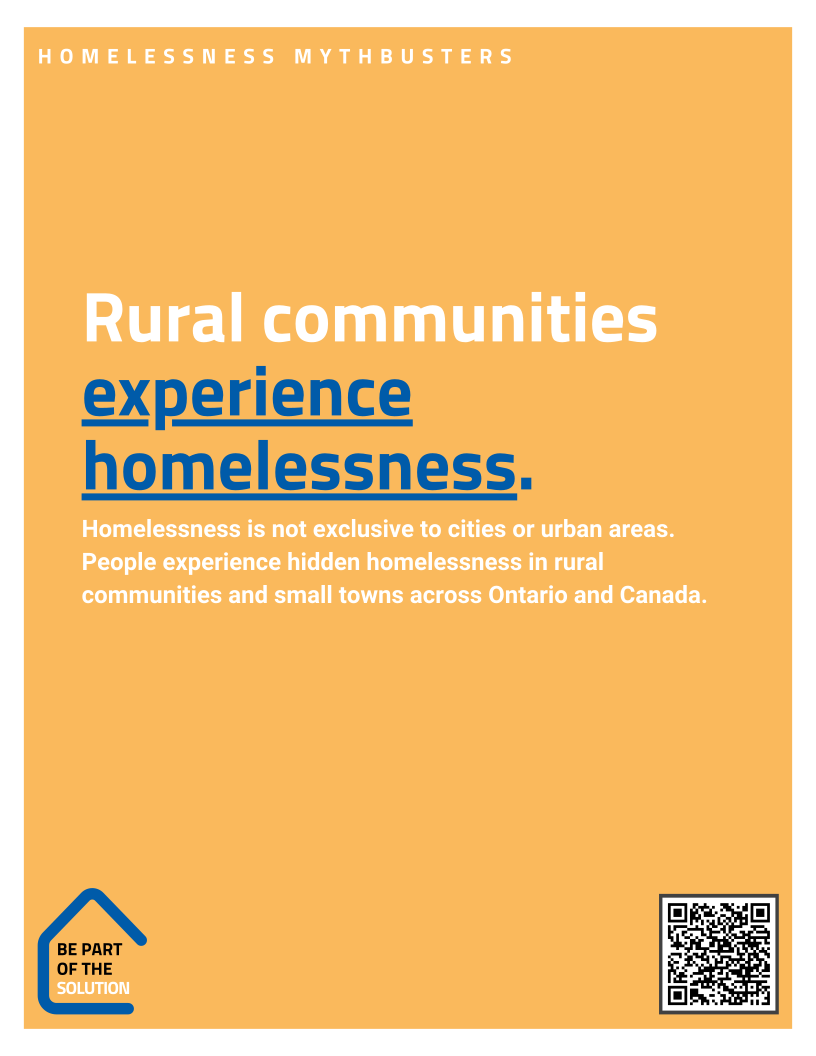
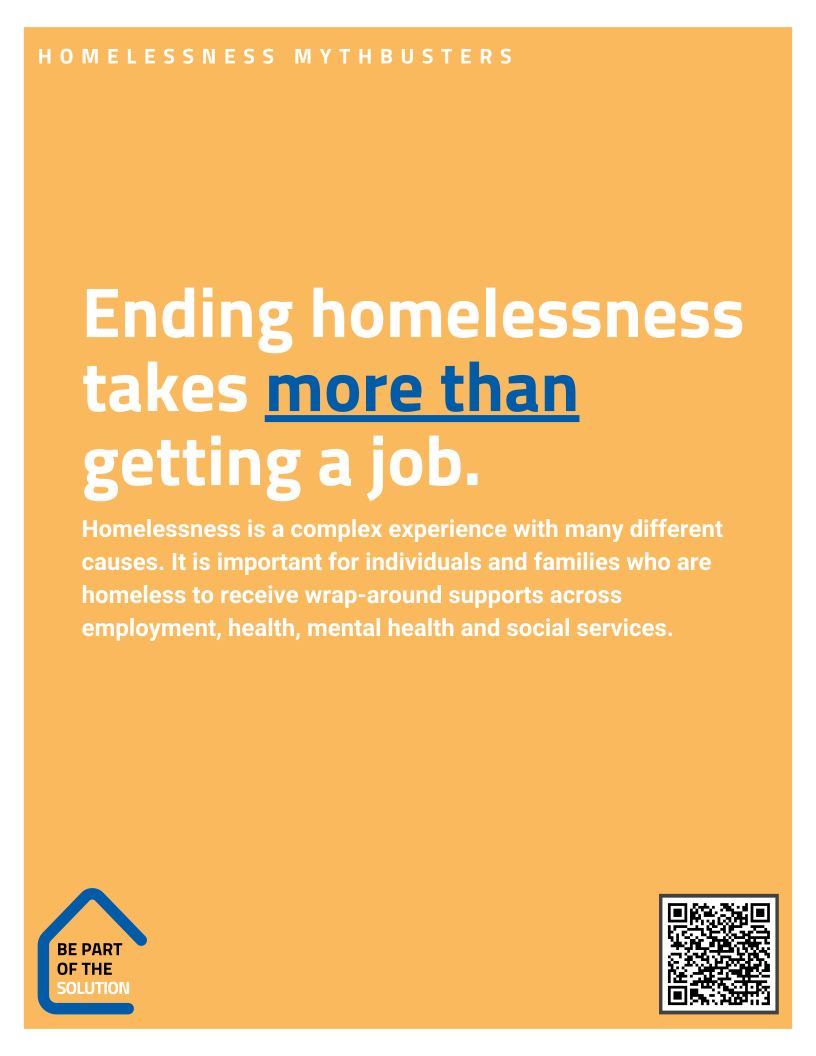
There are many myths and misunderstandings about homelessness that take the focus of conversations away from solutions. Check out our homelessness mythbusters posters below to learn some of the most common misconceptions.

References

  1. Government of Canada, Statistics Canada, “Homelessness: How Does It Happen?,” Statistics Canada, December 6, 2023, https://www.statcan.gc.ca/o1/en/plus/5170-homelessness-how-does-it-happen.
  2. “Causes of Homelessness | The Homeless Hub,” 2021, https://www.homelesshub.ca/about-homelessness/homelessness-101/causes-homelessness.
  3. “Indigenous Peoples | The Homeless Hub,” 2021, Indigenous Peoples and Homelessness.
  4. Jakob Koziel, Maria Savidov, and Andrea Frick, “A Brief Scan of COVID-19 Impacts on People Experiencing Homelessness: System Impacts and Responses,” by Bissell Centre, https://www.homelesshub.ca/resource/brief-scan-covid-19-impacts-people-experiencing-homelessness.
  5. Lucie Richard et al., “Testing, Infection and Complication Rates of COVID-19 Among People With a Recent History of Homelessness in Ontario, Canada: A Retrospective Cohort Study,” CMAJ Open 9, no. 1 (January 1, 2021): E1–9, https://doi.org/10.9778/cmajo.20200287.
  6. ODPRN, “Opioid-Related Toxicity Deaths Within Ontario Shelters: Circumstances of Death and Prior Medication & Healthcare Use - ODPRN,” ODPRN -, June 28, 2024, https://odprn.ca/research/publications/opioid-related-toxicity-deaths-within-ontario-shelters/.
  7. Canadian Alliance to End Homelessness, “CAEH19 Keynote Speaker Dr. Sandy Buchman: Death Is a Social Justice Issue,” November 20, 2019, https://www.youtube.com/watch?v=VOVSe2BwvKM.
  8. “Mental Health and Homelessness in Canada | The Homeless Hub,” 2021, https://www.homelesshub.ca/blog/mental-health-and-homelessness-canada.
  9. “Mental Illness and Addiction: Facts and Statistics,” CAMH, 2007, https://www.camh.ca/en/driving-change/the-crisis-is-real/mental-health-statistics.
  10. “Housing Shortages in Canada: Updating How Much Housing We Need by 2030,” CMHC, September 13, 2023, https://www.cmhc-schl.gc.ca/professionals/housing-markets-data-and-research/housing-research/research-reports/accelerate-supply/housing-shortages-canada-updating-how-much-we-need-by-2030.
  11. “Cost Analysis of Homelessness | The Homeless Hub,” 2021, https://www.homelesshub.ca/about-homelessness/homelessness-101/cost-analysis-homelessness.
  12. Office of the Auditor General of Ontario, “Annual Report: Section 3.14 Social and Affordable Housing,” 2017, in Chapter 3, 697–700, https://www.auditor.on.ca/en/content/annualreports/arreports/en17/v1_314en17.pdf.

Contact Us

Social Services Division
Lambton Shared Services Centre
162 Lochiel Street, Suite 100
Sarnia ON N7T 7W5

T: 519-344-2062
TF: 1-800-387-2882

Sign up for our Emails

Stay up to date on the County's activities, events, programs, and operations by subscribing to emails from us.